Why Numbers Are Not Enough: Scalars vs Vectors
Most people believe mathematics starts with numbers. That belief works-until it doesn't.

Most people believe mathematics starts with numbers.
That belief works-until it doesn’t.
Imagine you’re looking at a student’s preparation for an exam. You ask a simple question: How much did you study? The answer comes back: 10 hours.
That number feels informative. It is precise. It is measurable. It is also incomplete.
Ten hours doing what?
Reading passively? Solving problems? Watching videos? Being coached?
The moment you ask that follow-up question, pure numbers stop being sufficient. Something deeper is required.
That is where linear algebra actually begins.
Scalars: Quantities Without Direction
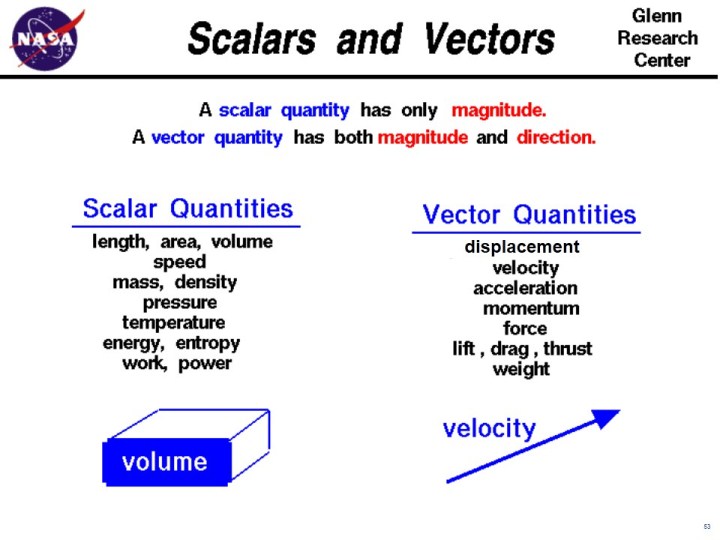
A scalar is a single number that represents magnitude-how much of something exists.
Time, temperature, total money spent, total hours studied. All scalars.
Scalars are powerful when direction does not matter. If you are measuring how long something took or how heavy something is, a scalar is exactly what you want.
But scalars collapse information.
When you say “10 hours studied,” you flatten every possible way of studying into one number. The number is accurate, but the description is dishonest.
The world rarely behaves like a scalar system.
When Scalar Thinking Breaks Down
Now consider two students:
- Student A studied 8 hours alone and 2 hours with a coach
- Student B studied 2 hours alone and 8 hours with a coach
Scalar thinking says they are identical: 10 hours each.
Reality disagrees.
Their effort is distributed differently. Their learning experience is different. Their outcomes are likely different.
The problem is not that the number is wrong. The problem is that the number is too simple.
When multiple influences act at once, scalar thinking hides structure instead of revealing it.
Vectors: Quantities With Direction
To describe the students honestly, we need more than one number.
We need something like this:
[
\begin{bmatrix}
\text{self-study hours}
\text{coaching hours}
\end{bmatrix}
]
This object is called a vector.
But calling it an “ordered list of numbers” misses the point.
A vector represents magnitude and direction together.
In this case:
- One direction corresponds to self-study
- Another direction corresponds to coaching
- The vector tells us how much effort was applied in each direction
Each student is no longer a number. Each student is a state.

Why Direction Changes Everything
Two vectors can have the same length and still mean very different things.
Student A’s effort points mostly toward self-study. Student B’s effort points mostly toward coaching.
Same magnitude. Different direction.
Linear algebra treats these as fundamentally different objects, because direction encodes behavior.
This is the first major mental shift:
Numbers tell you how much. Vectors tell you how.
Once you accept this, many real-world problems suddenly become representable instead of awkward.
From Values to States
A scalar answers:
“How big is it?”
A vector answers:
“Where is it in relation to everything else?”
That difference is subtle but profound.
In data science, machine learning, economics, physics, and engineering, we rarely care about isolated quantities. We care about configurations.
A user is not “30 years old.” A user is a point in a space of age, income, behavior, preferences, and history.
A system is not “under load.” A system is operating across CPU, memory, network, and latency dimensions simultaneously.
These are not scalar problems. They never were.
Why Linear Algebra Starts Here
Linear algebra is often introduced with symbols, rules, and matrices. That ordering is backwards.
The real starting point is this realization:
Many phenomena cannot be described honestly with a single number.
Vectors exist because reality has direction.
Once you begin modeling systems as vectors instead of scalars, everything else-dot products, matrices, projections-becomes a natural extension instead of an abstraction.
The Takeaway
Scalars are not wrong. They are incomplete.
Vectors do not complicate reality. They respect it.
If you are still thinking in scalars, linear algebra will feel artificial. Once you start thinking in vectors, it will feel inevitable.